Living Consciously

Intelligent Design–Or Not

I don’t know much about design, but I know what I like. Or more precisely, I know bad design when I try to use it.

Like the dangling coffee cup. During a recent trip, we had breakfast in a coffee shop—one that, from its prices and decor, clearly thought of itself as “upscale.” The food was okay, the coffee was okay, and the tea would have been okay had the water been hotter.

And the cups, because of their design, were practically unusable. The basic cup was a perfectly nice classic shape, wider at the top and curving down to a smaller base. It was the handle that was the problem. It was small and perfectly round, stuck onto the cup near the top. Think a donut clinging to the side of a pitcher. Or imagine Mickey Mouse with only one ear, and that a small one with a piercing that had gone horribly wrong.

If you care, you can see a photo of the cup at the website linked below, but here’s a rough sketch:
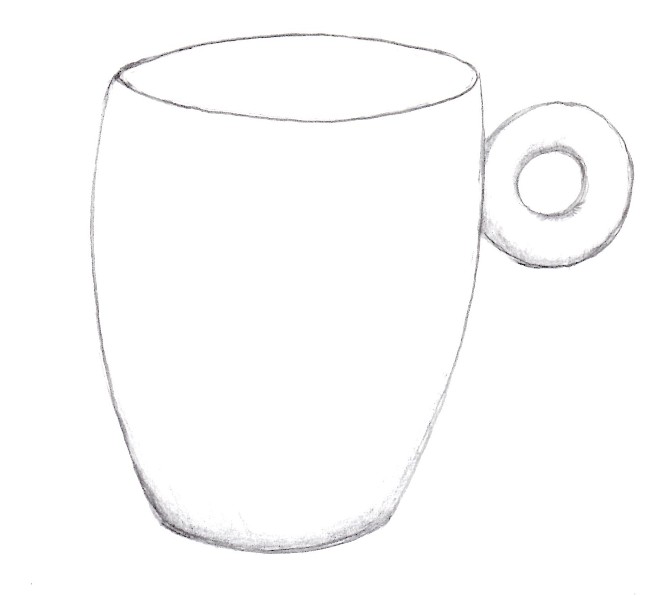
illy cup sketch

If you put your finger through the hole to pick up the cup, you couldn’t curl your other fingers beneath the handle for support without burning your knuckles against the side of the hot cup. If you tried to pick up the cup by the handle without that support, the weight of the cup would tip forward, spilling half the contents into your plate or your lap.

The only way to actually drink out of the cup was to treat it like a Chinese tea cup without a handle. This meant picking it up with both hands, carefully, at the top, so as not to burn your fingers.

The coffee shop advertised proudly that it served illy (not my typo; the “I” is not capitalized) brand coffee, and the cups obviously came from the coffee company, because “illy” marched proudly in red across the front of each one. When I took a look at the illy website, all became clear. The coffee cups aren’t merely vessels for drinking out of; they are art.

Here is the explanation, taken straight from the website: the illy company has “rethought” and “elevated” the coffee cup to “meld the sensory pleasures of coffee and art.” The company sells a variety of cups, with designs by a variety of artists, as an art collection. Buying one of these cups gives you an opportunity for “an experience that fully engages the senses and the mind.” The cup’s shape, created by an architect and designer, “was a full meeting of form and function: a vessel made to optimize diffusion of aromas and retention of heat, while establishing an entirely original tactile and aesthetic experience.”

Well, form and function may have met, but they obviously didn’t get along well. Apparently the designer was so focused on the aesthetic experience that he never got around to testing the cup to see whether an ordinary, non-artistic person in need of caffeine could actually drink out of one.

I have to admit, though, that there’s one way the cup design is a great success. Suppose you pick it up by the handle, and it tips forward and spills hot coffee into your lap, causing you to jump up, drop the cup, and utter several heartfelt expletives. Congratulations! You have just enjoyed “an experience that fully engages the senses and the mind.”

Categories: Fashion, Food and Drink, Living Consciously | Tags: , | 3 Comments

Being Pleased By Small Things

“Little things please small minds.” That line, spoken in the weary tone of someone forced to deal with annoying and inferior beings, was one of the ways my high school algebra teacher reacted to adolescent acting-up. Since this man soon left teaching in favor of selling insurance, maybe he eventually figured out that sneering at “small minds” wasn’t an effective disciplinary tool.

Besides, he was wrong. As someone who is often pleased by small things, I prefer to see this quality as a sign of a large mind—the mind of someone who is present in the moment, noticing and appreciating the details that can sprinkle enjoyment across an ordinary day. Or maybe it’s just a sign of a quirky mind. That works, too.

At any rate, here are a few of the small things that have pleased me lately:

1. Folding down the back seats in my new Honda CR-V for the first time. The process is such a little piece of tidy engineering. One pull on a strap pops the seat cushion up against the back of the front seat. One pull on another strap simultaneously tips the headrest forward and releases the seat back, and when this is pushed flat the headrest tucks itself neatly into a space just its size against the seat cushion. Quick and easy, and Bob’s your uncle.

2. Spending several—well, maybe a few more than several—enjoyable minutes browsing the Internet trying to find the origins of the phrase “Bob’s your uncle.” It’s British, but no one seems to know where it came from or what it means. Those of you who also wonder about things like this can check out a couple of the possibilities here.

3. Being careful, as usual, not to make eye contact with one of our resident cottontails when I passed it in the front yard on my way out to get the newspaper. They seem to think they are invisible if we don’t look directly at them, so out of courtesy we try not to disillusion them.

4. Watching my just-turning-two granddaughter discover that the front wheels on a push bike were too wide to fit between the coffee table and the couch, and then watching her get it into the space anyway—by turning it around and backing in with the aplomb of an experienced trucker parking at a truck stop.

5. Being amused by an eccentric carrot from the farmers market, which was short and fat at the top, narrowed into a pencil-sized curl for a couple of inches where it must have grown around an obstacle, and then expanded again at the tip. It resembled an acrobat in a very tight corset.

6. Over breakfast at a restaurant in western British Columbia, browsing through a brochure about the mining communities at Crowsnest Pass and realizing that “Colliery Tipple” would be a wonderful name for a very dark ale. (A tipple, by the way, as I learned from my geologist companion, is a structure at a mine where the extracted ore is loaded to be hauled away.)

7. Noticing a beautiful iridescent beetle, gleaming in the sun like a purple opal no bigger than my little fingernail, while we were out walking one morning.

8. And finally, I was especially pleased by one last small thing. While we were squatting in the middle of the street appreciating the beetle, the pickup that came past slowed way down and went around us instead of squashing us like, well, a bug.

Categories: Living Consciously, Odds and Ends, Travel, Words for Nerds | Tags: , , , , | 3 Comments

Playing With a Full Deck

When we were kids, our family was so frugal . . .

Cue chorus: “How frugal were you?”

We were so frugal, we only had two decks of cards.

At least, that’s how I remember it. They were the classic Bicycle cards, in the original cardboard boxes, which were kept in the top drawer of the china cabinet. They served us kids for countless games of Hearts and Old Maid, both of which left me with a lasting suspicion of the Queen of Spades. The grownups sometimes played Hearts, too, or poker for small change. (Side note to the unwary: keep your wits about you if you ever play poker with my mother.)

We played plenty of games of solitaire as well, which in my experience is a great way for a kid to learn the value of integrity. It may be easy to cheat when you’re the only one playing, but cheating takes all the fun out of winning. The biggest challenge with solitaire was to play a complete game without a sister looking over your shoulder to point out that you could have played that red seven on that black eight.

But no matter who was playing with them, when the games were over, the cards were put back into the boxes and back into the china cabinet. Those decks survived intact, jokers and all, for years. For all I know, the cards in the drawer today are the very same ones.

Another game that’s still in that drawer is the much-used Scrabble set. The box has been held together by a big rubber band for years now, but all the tiles are still there. Possibly because, a long time ago, my mother made a handy little drawstring bag to keep them in.

I’m not sure what my point is here; I certainly don’t want this to be a rant about how kids these days don’t know the value of things, blah, blah, blah. But I am a bit embarrassed to consider how many decks of cards I bought for my kids over the years. True, it was a different time. Cards were cheap, an impulse buy before a road trip or a little gift to drop into a Christmas stocking. But they never lasted long. First the jokers vanished, and then a stray ace or a six got lost, and pretty soon the rest went into the trash because you can’t play games when you’re a few cards short of a full deck.

It is true that the more stuff we have, the harder it is to keep track of it. Which sounds like a very good excuse for being the cheap grandma who doesn’t buy the grandkids a lot of toys.

But at least my Scrabble set, which came with its own bag, still has all the tiles.

Categories: Family, Living Consciously, Remembering When | Tags: , , | 2 Comments

Freedom of Speech

It was certainly the most enjoyable time I’ve ever spent in a courtroom.

Recently we had a chance to attend a naturalization ceremony in Wyoming where eight people, including a friend of ours from Turkey, became U. S. citizens.

Swearing allegiance to a new country is surprisingly quick. The oath itself only took a few minutes. But the people in charge carried out the event with the ceremony it deserved. There was a short speech of welcome from the judge. A children’s chorus sang several patriotic songs, including all three verses of the national anthem. Maybe they were a bit wobbly on the high notes, but they knew all the words—unlike the rest of us, who sang along for the first verse and faded off into muted humming for the others. Representatives from the DAR, the VFW, the American Legion, the Chamber of Commerce, and a couple of other organizations welcomed the new citizens with smiles, handshakes, and gifts of flags, banners, and patriotic tokens in red-white-and-blue bags.

The whole event was welcoming and warm. It was friendly. It was moving. It was inspiring.

And it was missing something.

The judge, in his talk, referred to his own immigrant grandparents and great-grandparents. He told the new citizens how much their children and grandchildren would benefit from their decision to become part of the United States. Without saying so directly, he implied that life wherever they had come from must have been bad and life here would be ever so much better.

Maybe, for some of them, that was true. But I happened to know it didn’t apply to at least one of the new citizens. Our friend would have had a perfectly fine, middle-class life in Turkey. He came here to go to school, and now, with a Master’s degree and eventually a Ph.D., he may have more opportunities here. But I suspect much of the reason for his decision to become a U. S. citizen was sitting beside me in the courtroom—his American wife.

I also know he is a responsible, hard-working, honorable young man—the kind of person you’d be glad to have move into your neighborhood, your town, or your country.

And that’s the piece the judge had missed. Essentially, he said how lucky the immigrants were to be here But he forgot to add how lucky we were to have them.

So all the while I watched and listened to the presentations of the gifts, and the three verses of the “Star Spangled Banner,” and the raising of right hands and swearing allegiance, the back of my mind was busy rehearsing what I wished the judge had said. What I would like to say if I had a chance. I imagined the judge asking if anyone had anything else to say. I imagined myself raising my hand and asking, “Your Honor, may I add something?”

We’ve probably all been in that situation. Sitting there, knowing something needs to be said, knowing just what should be said, and wishing someone would say it.

This time, someone did. After the last song, when the new citizens sat in front of their piles of red-white-and-blue gift bags, in that pause when an event is a heartbeat away from its conclusion, the judge asked, “Does anyone else have any words of welcome?”

And my hand went up without a second’s hesitation. I didn’t have to decide whether to act; I wasn’t nervous. In my mind, this had already happened, and my reaction was more like, “Oh, there’s my cue.”

I raised my hand and said, “Your Honor, may I add something?” He nodded. So I stood up and put in that missing piece. I thanked the new citizens for bringing their skills, their energy, and their hard work to the United States, and I told them we were grateful to have them here.

It was something that needed to be said. And on this particular occasion, I happened to be the person in the right place at the right time to say it.

One of the rights guaranteed to U. S. citizens, old and new, is freedom of speech. We have the right to say what we think, to criticize our elected officials, to express our opinions. Sometimes we exercise that right rudely, crudely, or loudly.

But like all rights, this one comes with obligations and responsibilities. Sometimes, freedom of speech goes beyond what we can say to what we should say. It means each of us, in a circumstance where “somebody should say something,” can be that somebody. Sometimes, freedom of speech means being the one to say the “something” that needs to be said.

Categories: Living Consciously | Tags: , , | 2 Comments

Texting and Survival of the Fittest

Rapid City has just imposed a ban on texting while driving. This is probably a good thing, but for me it comes a little late. I have already been run over by someone who was texting.

The incident was clearly not my fault. I wasn’t doing anything life-threatening like running into traffic or crossing the street at a corner. I was right where a good law-abiding pedestrian ought to be: on the sidewalk.

Of course, so was the woman who ran over me. Did I mention that she wasn’t in a car at the time? She was walking.

I saw her coming a block away. She wasn’t a kid, but she was young; maybe in her 30’s. She was walking down the sidewalk toward me, along with a man about her age and a teenage girl. The three of them, of course, took up the whole sidewalk. Not a problem. I assumed they would do the polite pedestrian thing and drop into single file while we passed each other. As we drew closer, I did my part by moving to the right, so I was walking on the edge of my side of the sidewalk.

I could see that the woman was looking at her phone, but I assumed she was also paying some attention to her surroundings. Silly me.

Just as we were about to meet, the girl veered off to her right and headed across the street. The woman finally glanced up from her phone as she turned to say something to the girl.

And that’s when she hit me. Her elbow got me right in the solar plexus, which was uncomfortable as well as surprising.

What was equally surprising to me was how surprised the woman was. She had been so focused on her phone that she had no idea I was mere inches away from her until she ran over me. Her “radar,” that warning sense we have when someone approaches our personal space, was totally disengaged.

I’m sure that warning sense has been crucial in helping humans survive all kinds of predators and evolve into the technologically advanced beings we are today. But as we continue to evolve, I’m not sure where our technology will take us. This woman was so completely unaware of her surroundings that she was at serious risk. A mountain lion would have considered it poor sportsmanship to grab her.

She didn’t apologize for running over me, either. Possibly because she was still focused on her phone—in dismay, this time. When she hit me, she had dropped it onto the sidewalk, where it exploded into several pieces.

I couldn’t find it in my heart to feel the least bit sorry.

Categories: Living Consciously, Odds and Ends | Tags: , | 3 Comments

A Little Too Close and Personal

When I was a kid, going to the circus was a big deal. In Winner, South Dakota, in the 1950’s and 1960’s, the circus wasn’t held in a “big top.” It was in the open air at the baseball field. Since the field was lighted, it was a perfect venue for an outdoor circus, especially at night.

I remember being awed by the elephants striding across the ground with ponderous dignity, carrying beautiful women in splendid clothes. I remember watching the aerialists out over the field, high above our heads. Their costumes glittered in the lights as they swung from trapezes, twisting and twirling and flinging themselves through the air. It was breathtaking. It was beautiful. It was magical.

Then one year, when I was probably ten or eleven, for some reason the circus was held indoors. I remember walking into the Winner city auditorium with my sisters, scurrying through the crowd, almost overwhelmed by the people and the noise, and finally finding room to squeeze into one of the upper rows of the packed bleachers.

In this makeshift space, even our upper bleacher seats were like being in the front row. The elephants were only a few feet away. The aerial acts were almost at eye level. Instead of seeing the performers as remote creatures, way up in the air in the spotlights, we were up close and personal.

And I was shocked.

The elephants were still dignified. But their skin looked worn and rough, their headdresses were a little dingy, and, to put it bluntly, they smelled really awful.

The aerialists were no longer the beautiful, fairy-like flying creatures I expected. They were dreadfully ordinary, even plain. The flowing golden hair on some of the women was clearly dyed. Some of them even looked old—maybe as ancient as 40 or so. Their glamorous costumes, seen that close, didn’t look much different from swim suits. Some of them had obviously been mended. The sequins lost much of their sparkle in the everyday indoor lighting.

Even worse, I started to recognize performers from one act to the next. It was disconcerting to realize that “Madame Yvette” with her dancing poodles was the very same woman I had just seen swinging from a trapeze as part of the “Flying Santorinis.”

Without the lights and the distance, the illusion that helped make the acts so marvelous was destroyed. The reality was such a disappointment that I lost much of my childhood enthusiasm for the circus. I had seen too much of it, too close. The magic was gone.

I’ve been to a few circuses since then. I’ve enjoyed them. But I’ve never recaptured my early awe and wonder. I know too much about the reality behind the illusion.

I clearly remember the last time I went to a circus. Unbelievably, it was 25 years ago. It was the first time I met my soon-to-be stepchildren. Believe me, there were plenty of illusions involved on that occasion.

Thank goodness that, over the years, we’ve grown to know each other well enough to get past most of those illusions. It hasn’t always been an easy process. But the closer we have become, the more we have learned to value reality.

Just think about the distance it takes to maintain our illusions about other people. A couple you know slightly might seem to have a perfect marriage. Unless you get close, you have know way to know what really goes on between them. I used to see other stepfamilies who seemed to be doing everything right. As I got to know them better, I realized most of them had the same struggles and challenges that we did.

This week we enjoyed a performance of “Hairspray” by a local theatre group. The singers and dancers were graceful, energetic, and polished. Whether they were veterans or this was their first time on stage, they all looked confident and comfortable. It wasn’t until after the show, when dozens of cast members surged into the theatre lobby on a wave of adrenaline, that we could feel the nervous energy they must have been feeling. From the audience, we weren’t aware of the sweaty palms and the shaking knees.

There’s a time and place for illusion, and I greatly appreciate the many performers who put so much discipline and practice into creating illusions that we can enjoy. But I have come to appreciate even more the reality behind those illusions. Whether it’s a show, a job, or a family, the most incredible performances are the ones given by people who show up, day after day, and do what they do.

Who have the courage, the grace, and the heart to do what needs to be done—and even to make it look easy. To get up close and personal. To live with reality—even when some of its sequins are missing.

Because reality, I now know, is where the real magic happens.

Categories: Family, Living Consciously, Remembering When | Tags: , , | 1 Comment

Little People at the Holiday Table

Sitting around the breakfast table on Christmas morning over our traditional homemade cinnamon rolls, scrambled eggs, and bacon, I had an epiphany. (Is it permissible to have an epiphany on Christmas Day, or does it have to wait until January 6? Maybe it’s okay as long as it’s an epiphany with a small “e.”)

Anyway, it happened about the time I was eating my fourth (or fifth or thirteenth—but who’s counting?) piece of bacon and watching the three newest participants in this particular tradition. The two-and-a-half-year-old, having rejected the unabridged dictionary as a booster seat, was on his knees in a chair of his own. The two littler ones, just past one and not quite one, were on their mother’s laps. They intercepted bites of egg with surprising tidiness and did their best to get a full share of the bacon. They seemed enthusiastic about the cinnamon rolls, too—though I did have some suspicions about my daughter’s request for a third one “because the baby ate all of the last one.”

And that’s when I had the small-e epiphany. “Oh my gosh. We’re going to need a kids’ table.”

One of the biggest blessings in my life right now is having two of my kids and their growing families living right here in Rapid City. And that means, one of these years, at family gatherings we will need an extra table for short people. A place where they can skip their green beans without anyone noticing, decorate their fingertips with black olives, and giggle a lot over conversations not meant for adult ears.

Just to be clear, in my experience the point of having a kids’ table isn’t to segregate squirmy small people with rudimentary table manners away from the good china and crystal. It’s more about squeezing people into the available space. At family gatherings when I was growing up, the kids were put at the kitchen table and card table because the dining room table, even expanded with all its leaves, would only hold 12 or 14.

It was usually fun at the kids’ table, of course. And sometimes educational. I remember one discussion about whether some red stuff in a little bowl was jelly or Jell-O. No one wanted to be the first to taste it. When someone finally got brave and tried half a spoonful, we still weren’t sure. (All these years later, I assume it must have been cranberry sauce.)

Still, I always felt I was missing out by not being at the adult table, because so many family members were and are such great storytellers. I loved hearing their stories, and every time I heard a burst of laughter from the dining room I assumed I had just missed one.

So at our house, when we do need a kids’ table, I hope we have room to put it at just the right distance from the adults’ table. It’s a delicate balance. They need to be far enough away so we can pretend we don’t hear or see what they’re doing. Yet I’d like them close enough so, if they want to, they can easily eavesdrop on our conversations. It’s just one more way of passing along the family stories. Especially, perhaps, the ones we don’t necessarily intend them to hear.

Categories: Family, Food and Drink, Living Consciously, Remembering When | Tags: , , | 1 Comment

Cleaning Up the Mess

A week ago, when the big blizzard was just getting started, it was easy to write about it with humor. This week, not so much.

Oh, there’s no problem finding the lighter side based on just our own experience. We were incredibly fortunate. Our power was only out for one morning, plus two other short intervals. We didn’t have any trees fall on our house, damage our cars, or block our driveway. We didn’t have any medical emergencies or food shortages. We didn’t even run out of library books.

Basically, for us the storm was like a weekend retreat at an isolated discount spa. It featured nice towels, reasonably hot water, remarkably average food, and clean sheets if you wanted to change them yourself. Its most noteworthy offering was its unique exercise program. Snow shovels were provided by the management; guest were required to furnish their own snowpants and boots.

For a great many people, though, this storm was nothing to laugh about. There’s been enough said and written about its impact that I don’t need to add any more. The power outages, the broken trees, the damaged buildings, and especially the heartbreaking loss that puts everything else into perspective—the financial and emotional disaster of the thousands of dead cattle and sheep.

Of course, there are always a few people looking for someone to blame, like the complainers who seem to think the snowplows should hit their streets as soon as the first snowflakes do. Or the ones who don’t seem to grasp that rebuilding power lines takes time, especially when the work is complicated by deep snowdrifts, mud, and downed trees.

Many, many more, however, cope without drama. They dig themselves out and put themselves out to help their neighbors,. Like the volunteers with snowmobiles taking oxygen and other supplies to stranded people with medical needs. The unsung heroes with tractors plowing out their neighborhoods. Or the crews out working long, long hours and days to clear roads and restore power.

A columnist for the Rapid City Journal, Michael Sanborn, wrote a piece after the blizzard praising the way people came together to help each other. I agreed with most of what he said. Except this: “The western South Dakota community has shown our resilience. Had this happened in New York or Washington, it would still be the nation’s top story, because they aren’t as tough as we are.”

What nonsense. I somehow doubt he would say that in person to those who lost homes, businesses—and loved ones—in superstorm Sandy. When it comes to coping with disasters, there’s no difference between South Dakota, Haiti, Oklahoma, New York City, or anywhere else. Ultimately, we’re all part of the same community. The support and help we give each other is what helps make us so tough and resilient.

That’s why we keep shaking our heads and getting back up when Mother Nature—who can be a harsh and unforgiving old crone—has whacked us again. That’s why, when the storm is over, so many people matter-of-factly set about cleaning up the mess.  And why so many of them say, and mean it, “It could have been worse.”

Categories: Living Consciously | Tags: | 4 Comments

Singing in the Rain

The romantic appeal of walking in the rain with your sweetheart has been grossly overstated.

Big, cold drops hitting the back of your white cotton shirt and plastering it, one blotch at a time, to your increasingly clammy skin. The curtain of drips falling from the brim of your broad-brimmed hat (your white sun hat, worn because the morning was so bright and sunny when you left the house). The creeping wetness across the back of your shorts.

And above all, the squishiness inside your walking shoes. That would be the nearly new, rather expensive “country hikers” you bought for their ruggedness without thinking there was any need for them to be waterproof. Not that it would matter if they were. Whatever water is seeping into them from below is insignificant compared to the amount trickling down your bare legs and filling the shoes from the top. Your socks gradually become sodden sponges, and with every step you can feel water spurting out from beneath your toes.

Gene Kelly notwithstanding, there is nothing romantic about any of this.

Okay, time to stop whining and get back to reality. We merely went out for a walk on a sunny summer morning and happened to get caught by a fast-moving shower that sneaked up on us from an unexpected direction. It poured for the last half-mile of our walk, then, having drenched us thoroughly, stopped just as we turned into our own driveway. I swear that last peal of thunder was really a deep-throated chuckle.

But we weren’t out on the road on a motorcycle. Or driving cattle. Or hauling bales. Or checking up on elk or buffalo or tourists. Or standing at a construction site holding a “slow” sign for drivers that splashed us as they went by. Or doing any of the outdoor jobs that don’t stop just because the people doing them might get a little—or a lot—wet. Jobs that some of us, sitting at our nice dry desks in nice dry clothes after our nice warm showers, don’t have to do.

Thanks to them all. May they be blessed with good raincoats, waterproof boots, and dry socks.

Categories: Living Consciously | Tags: | 3 Comments

Finding the “Team” in “Tee”

The batter, his oversized shirt hanging past his knees but his stance firm and his grip on the bat determined, took his first swing. It was a clean miss. His second knocked the tee over. His third, though, was a solid hit straight toward the outfield.

Or maybe that was the infield. At any rate, it was the spot where a dozen or so five-year-old fielders, arranged in rows, were waiting. They were quivering like a bunch of bright-eyed puppies waiting for someone to throw a ball for them to chase.

And chase the ball is exactly what they did. As it came toward the center of the pack—oops, the team—they surged toward it in a mad scramble to get there first. Half a dozen of them ended up in a tangle of skinny arms and legs that looked more like a post-tackle football pileup than something that should be happening on a baseball field. Meanwhile, the batter, after a pause to watch the action and some encouragement to run in the right direction, trotted to first base.

This wasn’t baseball, exactly. It was teeball, which is sort of baseball lite for little ones, intended to teach them the fundamentals with an emphasis on the “fun.” My own kids having been involved in music, drama, and debate rather than athletics, this was my first-ever teeball game.

It was also my grandson’s first game. He’s a budding athlete, and for him this was a big event. He looked quite professional and handsome (cute, actually, but he hates being called that) in his uniform shirt and ball cap, his uniform pants, the bright blue belt he had picked out himself, and his hot green soccer shoes. He was serious about the throwing and catching practice that preceded the game, he was intent when it was his turn to bat, and he was alert and focused out in the field.

Maybe a little too focused, actually. That pile of kids trying to get the ball away from each other? Guess whose grandson was right in the middle of the pile. Guess whose grandson was one of the kids who got a little extra talk from the coach after the game. He told us later that the coach explained they weren’t supposed to fight over the ball because they were all on the same team.

Being on the same team isn’t a concept these little ones quite grasp yet. But over the next six weeks of teeball, they might just begin to learn it, because they have some excellent teachers.

Fathers. There was the official coach. His official assistants. Several unofficial helpers, like my grandson’s father, who were out there on the field helping herd—er, coach. Volunteers, of course, the whole bunch of them, who almost but not quite outnumbered the kids. They were all over the field: encouraging, supporting, and teaching. With no yelling, no scolding, and no unrealistic expectations that these five-year-olds were going to act like “real” ballplayers. They appeared to be having as much fun as the kids were.

And that, I realized, is the real team in teeball. Happy Father’s Day to them all.

Categories: Family, Living Consciously | Tags: | 1 Comment

Blog at WordPress.com.