
Monthly Archives: October 2014

Intelligent Design–Or Not

I don’t know much about design, but I know what I like. Or more precisely, I know bad design when I try to use it.

Like the dangling coffee cup. During a recent trip, we had breakfast in a coffee shop—one that, from its prices and decor, clearly thought of itself as “upscale.” The food was okay, the coffee was okay, and the tea would have been okay had the water been hotter.

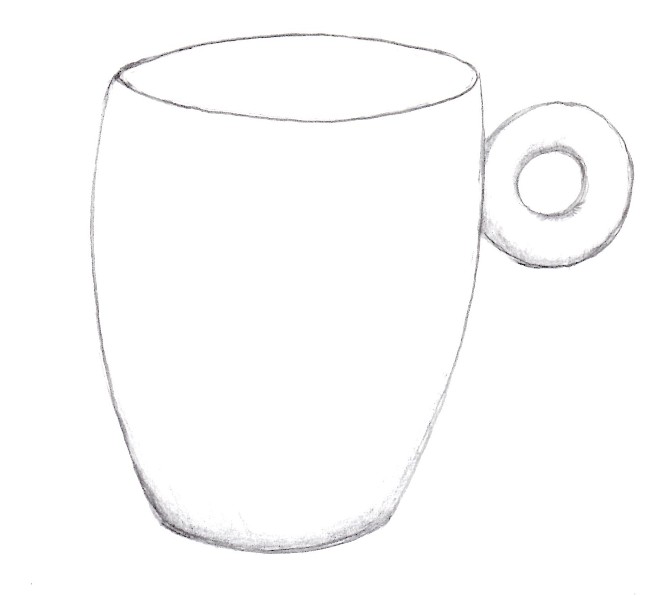
And the cups, because of their design, were practically unusable. The basic cup was a perfectly nice classic shape, wider at the top and curving down to a smaller base. It was the handle that was the problem. It was small and perfectly round, stuck onto the cup near the top. Think a donut clinging to the side of a pitcher. Or imagine Mickey Mouse with only one ear, and that a small one with a piercing that had gone horribly wrong.

If you care, you can see a photo of the cup at the website linked below, but here’s a rough sketch:
illy cup sketch

If you put your finger through the hole to pick up the cup, you couldn’t curl your other fingers beneath the handle for support without burning your knuckles against the side of the hot cup. If you tried to pick up the cup by the handle without that support, the weight of the cup would tip forward, spilling half the contents into your plate or your lap.

The only way to actually drink out of the cup was to treat it like a Chinese tea cup without a handle. This meant picking it up with both hands, carefully, at the top, so as not to burn your fingers.

The coffee shop advertised proudly that it served illy (not my typo; the “I” is not capitalized) brand coffee, and the cups obviously came from the coffee company, because “illy” marched proudly in red across the front of each one. When I took a look at the illy website, all became clear. The coffee cups aren’t merely vessels for drinking out of; they are art.

Here is the explanation, taken straight from the website: the illy company has “rethought” and “elevated” the coffee cup to “meld the sensory pleasures of coffee and art.” The company sells a variety of cups, with designs by a variety of artists, as an art collection. Buying one of these cups gives you an opportunity for “an experience that fully engages the senses and the mind.” The cup’s shape, created by an architect and designer, “was a full meeting of form and function: a vessel made to optimize diffusion of aromas and retention of heat, while establishing an entirely original tactile and aesthetic experience.”

Well, form and function may have met, but they obviously didn’t get along well. Apparently the designer was so focused on the aesthetic experience that he never got around to testing the cup to see whether an ordinary, non-artistic person in need of caffeine could actually drink out of one.

I have to admit, though, that there’s one way the cup design is a great success. Suppose you pick it up by the handle, and it tips forward and spills hot coffee into your lap, causing you to jump up, drop the cup, and utter several heartfelt expletives. Congratulations! You have just enjoyed “an experience that fully engages the senses and the mind.”

Categories: Fashion, Food and Drink, Living Consciously | Tags: , | 3 Comments

Being Pleased By Small Things

“Little things please small minds.” That line, spoken in the weary tone of someone forced to deal with annoying and inferior beings, was one of the ways my high school algebra teacher reacted to adolescent acting-up. Since this man soon left teaching in favor of selling insurance, maybe he eventually figured out that sneering at “small minds” wasn’t an effective disciplinary tool.

Besides, he was wrong. As someone who is often pleased by small things, I prefer to see this quality as a sign of a large mind—the mind of someone who is present in the moment, noticing and appreciating the details that can sprinkle enjoyment across an ordinary day. Or maybe it’s just a sign of a quirky mind. That works, too.

At any rate, here are a few of the small things that have pleased me lately:

1. Folding down the back seats in my new Honda CR-V for the first time. The process is such a little piece of tidy engineering. One pull on a strap pops the seat cushion up against the back of the front seat. One pull on another strap simultaneously tips the headrest forward and releases the seat back, and when this is pushed flat the headrest tucks itself neatly into a space just its size against the seat cushion. Quick and easy, and Bob’s your uncle.

2. Spending several—well, maybe a few more than several—enjoyable minutes browsing the Internet trying to find the origins of the phrase “Bob’s your uncle.” It’s British, but no one seems to know where it came from or what it means. Those of you who also wonder about things like this can check out a couple of the possibilities here.

3. Being careful, as usual, not to make eye contact with one of our resident cottontails when I passed it in the front yard on my way out to get the newspaper. They seem to think they are invisible if we don’t look directly at them, so out of courtesy we try not to disillusion them.

4. Watching my just-turning-two granddaughter discover that the front wheels on a push bike were too wide to fit between the coffee table and the couch, and then watching her get it into the space anyway—by turning it around and backing in with the aplomb of an experienced trucker parking at a truck stop.

5. Being amused by an eccentric carrot from the farmers market, which was short and fat at the top, narrowed into a pencil-sized curl for a couple of inches where it must have grown around an obstacle, and then expanded again at the tip. It resembled an acrobat in a very tight corset.

6. Over breakfast at a restaurant in western British Columbia, browsing through a brochure about the mining communities at Crowsnest Pass and realizing that “Colliery Tipple” would be a wonderful name for a very dark ale. (A tipple, by the way, as I learned from my geologist companion, is a structure at a mine where the extracted ore is loaded to be hauled away.)

7. Noticing a beautiful iridescent beetle, gleaming in the sun like a purple opal no bigger than my little fingernail, while we were out walking one morning.

8. And finally, I was especially pleased by one last small thing. While we were squatting in the middle of the street appreciating the beetle, the pickup that came past slowed way down and went around us instead of squashing us like, well, a bug.

Categories: Living Consciously, Odds and Ends, Travel, Words for Nerds | Tags: , , , , | 3 Comments

Romancing the Stone

It’s a beautiful piece of sculpture: two figures, slightly larger than life-sized. A lovely young woman, kneeling as if to pick up the jar she has apparently just dropped, gazes up over her shoulder at a man standing beside her.

He is a step away from the woman, gazing back at her with his hand extended, perhaps beckoning or reassuring. He doesn’t appear to be doing anything practical like giving her a hand up or offering to help pick up the jar. It looks more like he’s encouraging her to look at him.

True, he’s well worth looking at. His thick, curly hair is a bit much, but he’s handsome, with an interesting face and the kind of toned, muscular body that comes from regular visits to the gym. This is obvious to the most casual observer, because the only thing he’s wearing is a strategically-placed piece of drapery.

The electricity between them fairly crackles. The piece is like the cover of a romance novel captured in stone.

Jesus-MaryM-Statue-crop

Of course, maybe romance, like beauty, is in the eyes of the beholder. The kind of love the artist intended to portray is open to question. Because this sculpture, by Bruce Wolfe, (there’s a better picture here) is in the mission church in Santa Barbara, California, and represents Jesus and Mary Magdalene. It depicts the moment he speaks to her, after she has come to his tomb and found it empty.

Maybe the intensity between the man and woman is religious. But my guess is that any fan of The Da Vinci Code who believes Mary Magdalene and Jesus were married would find supporting evidence in this beautiful artwork. Or maybe Mr. Wolfe was just following a venerable tradition, going at least as far back as the Renaissance, of using religious themes as a vehicle for portraying the human body with a minimum of covering. Just think of Michelangelo’s “David,” or all those images of Adam and Eve with and without their fig leaves.

On a side note, the first time I saw actual fig leaves on a tree in Turkey, I was surprised. They’re large, all right, but their shape doesn’t lend itself well to modest covering. They look almost like hands with the fingers spread apart. fig leafThere’s a lot of open space in a fig leaf. It would take several of them, layered carefully, just to create a fig-leaf Speedo.

But fig leaves and draperies aside (don’t we wish), I saw this sculpture recently in the company of another woman who, like me, is respectable and responsible and old enough to know how to behave in public. And we came close to getting the giggles like a couple of 13-year-old girls at a Mr. Universe contest. We had to move on to another section of the church before we embarrassed ourselves with our whispered but decidedly non-religious comments.

But not before she summed up our reaction. “Wow. That’s a hunky Jesus. I’d follow him.”

Hmmm. As a strategy for religious conversion, that just might have its merits.

Categories: Travel | Tags: , , , , , | Leave a comment

Kayak Spelled Backwards is Still Kayak

I love water. I drink it by the gallon. I find it soothing in the shower. I enjoy hearing it drum on the roof during summer rains. I even—don’t tell anyone—appreciate using it, warm and soapy, to wash dishes.

Just don’t ask me to dunk my head under the stuff. I like to keep my essential elements in their proper places: water is for drinking, air is for breathing, and I prefer my nose to have free access to the latter. (I developed this firm belief long ago, during swimming lessons on chilly June mornings at the Gregory municipal swimming pool, under the inexperienced tutelage of a teenage boy who kept his blue-lipped little charges in line by threatening to duck them.)

I also tend to believe that little plastic boats are meant for toddlers to play with in the bathtub. If, theoretically speaking, I ever wanted to learn to paddle a kayak, I would be inclined to do so at Rapid City’s own little Canyon Lake, on a summer evening so calm that the resident mallards could use its still water as a mirror. Not in anything larger or more active. Rapid Creek, say, or the Missouri River, or Lake Michigan.

And certainly not an ocean. Oceans have waves. And seaweed. And sharks. Besides, that immeasurable quantity of water is more than I care to get personally involved with.

How on earth—er, on water, then, did I ever wind up out on the Pacific Ocean in a flimsy plastic kayak?

The friend we were visiting in beautiful and charming Santa Barbara, California, had planned the kayaking expedition, and I couldn’t think of a graceful way to say no. I merely hoped secretly for some small act of God—not an earthquake or anything, but maybe a thunderstorm (drought-stricken California could use the rain, after all)—to prevent it. I was like the bride who knows perfectly well she’s making a serious mistake, but she doesn’t know how to back out once all the family members have been invited and the bridesmaids’ dresses have been bought.

God chose not to act. So I ended up on a beach on Santa Cruz Island with a dozen other people who all seemed absurdly enthusiastic about the idea of paddling along the rocky coast in shallow plastic boats.

Learning I would be in a two-person kayak with my partner, equally inexperienced at paddling but at least able to swim, helped. The wetsuit helped. The snug-fitting and reassuring life jacket helped. The guides’ patient, thorough instructions helped. I especially appreciated the part about “you don’t have to go into any cave or channel you’re not comfortable with.”

None of that did anything to alter the fact that, if we tipped over and went under water, I would probably lose my contact lenses and spend the rest of the outing unable to see the front end of my own kayak.

But we didn’t tip over. We managed the paddling with an astonishing degree of coordination. We saw harbor seals and sea lions and dozens of coastal birds. We negotiated the inside of a cave. We learned one can hold a kayak in place by grabbing a stalk of kelp and using it as an anchor. We got safely back to the beach after an hour and a half, with no harm other than tired arms that felt more limp than the kelp.

Am I glad I did it? Yeah, probably. After the fact, it’s always gratifying to know you did something you were afraid to do.

Was it fun? Um, well. . .

Okay, I did grudgingly began to consider the possibility of the potential that, with some practice and some kind of solution to the contact-lens issue, kayaking might eventually begin to be sort of fun.

At least on Canyon Lake.

Categories: Travel | Tags: , , | 1 Comment

Blog at WordPress.com.