Monthly Archives: September 2011

How Come Everybody Knows This Stuff But Me?

Maybe it's because I spent grades kindergarten through eight in a rural school that never had more than five pupils. (I was the only person in my high school physical education class who didn't know how to play softball.) Maybe it's because we didn't have television when I was a kid. Maybe it's because I spent most of my teenage years reading instead of dragging Main Street or sneaking out to illicit parties.

Whatever the reason, there is a surprising amount of stuff "everyone" knows that I don't. Not just who Snooki and Lady Gaga are, or whether the Kardashian sisters actually do anything or simply are famous for being famous. I'm talking about a more fundamental layer of shared cultural background that I seem to have missed.

Every now and then I am reminded of some odd bit of apparently common knowledge that isn't common for me. These are things everyone else seems to understand and take for granted, but I don't get. Either I've never had a chance to learn them, I've never needed the information, or—more likely—I never wanted to admit my ignorance by asking.

Now, for the first time ever, the depths of my ignorance are about to be revealed. You read it here first, folks. These are some of the things I don't know:

1. Jumping-rope rhymes. As far as I can remember, I have never chanted one in my life.

2. When a vehicle with a standard transmission won't start, and you push or pull it to get it moving and then start it by "popping the clutch," how exactly do you do that? Do you begin with the clutch in, then let it out at the crucial moment? Or do you push it in? Or push it in and then let it out? Confusion over this issue is probably the major reason I have always driven an automatic. At least I know exactly what to do if that ever fails to start: dig out my cell phone and call AAA.

3. How exactly do you play "Rock, Paper, Scissors?"

4. I've done enough hiking to be able to identify poison ivy. I'm rather too familiar with thistles and creeping Jenny, since the yard is full of them. But what precisely does a pot plant look like? Yes, I've seen pictures, but to the best of my knowledge I've never seen one in the flesh. (Of course, since I'm not sure what they look like, how would I know?) The stuff could be flourishing in the overgrown back half of our yard right this very minute, along with the thistles and that one tall asparagus plant. If anybody should ever discover marijuana growing wild back there, could I go to jail?

5. Did Gilligan and company ever get off that island? If so, how?

Instead of whining about it, of course, I could just look up some of this stuff online. Or maybe I should focus on all the other things I do know. Like what a "gerund" is, or a "stoat." Or what part of a car in England is called the "bonnet." Or what Harry Truman's middle initial stands for. I'd be perfectly willing to enlighten you on any of those important facts.

Right after you explain how to pop a clutch.

Categories: Remembering When, Words for Nerds | Tags: , , , , , , , , , | 3 Comments

Antique, Collectible, Or Just Plain Junk?

What's the difference between "antique" and "vintage" or "collectible?"

Oh, about a hundred bucks.

By the way, have you ever noticed that, even though most of us probably say it as "antique shop," most stores that sell old stuff call themselves "antiques shops?" That may be a distinction only an English major could love, but it does make a difference.

Here's why, if you want to get nitpicky about it (and of course editors always do—it's what we get paid the big bucks for). An "antique shop" would be a very old store that may or may not sell old stuff. An "antiques shop" would be a store that may or may not be old itself but that sells very old stuff.

Which means you'd better be careful to refer to the mature lady who is explaining the provenance of that 18th century chamber pot as an "antiques dealer" rather than an "antique dealer" if you want to get a decent deal.

But back to the definitions. It's really quite simple.

1. Any object that was made during my lifetime absolutely cannot be an "antique."

2. Any object that I remember being used in our household when I was a child is not an antique. It may, just barely, with caution, be referred to as "vintage."

3. Any object that I have personally used in my adult life is not "vintage." It might possibly be considered "collectible."

4. Calling a new object that is mass-produced in the millions a "collectible" does not automatically make it a potentially valuable investment. (Beanie Babies, anyone?)

5. Sometimes old junk is just old junk. Describing a 15-year-old computer as an "antique" will not help you get rid of it at a yard sale.

Suppose, however, an object of a certain age is in my possession and I want to sell it. If calling it "antique" rather than "vintage" will increase the price, I could live with that. If you're willing to buy it, you can call it whatever you like.

Just be sure your check is good. Otherwise you may discover a whole different meaning to the term "collectible."

Categories: Words for Nerds | Tags: , , , , | Leave a comment

The Great New Zucchini Weight-Loss Plan

It's fine to joke about people in small towns who never lock their doors except in August, when their neighbors have excess zucchini to get rid of. It's not so funny when your partner, your sweetheart—the person you thought you could trust most in all the world—is too polite to say, "No, thanks," to a colleague and comes home with the world's largest zucchini.

No kidding. "Zucchini" in Italian apparently means "little squash." Not the case here. This particular overgrown vegetable was the size of a chorus girl's thigh. Or maybe a sumo wrestler's forearm—if the sumo wrestler were on the petite side. It was easily 18 inches long. And its circumference? Any would-be fashion model with thighs that big would immediately sign up for Weight Watchers. One slice would have filled a dinner plate. Heck, one slice could have been used for a dinner plate.

This was clearly not a vegetable to sauté in butter and have on the side.

I briefly considered keeping it beside the front door as protection against burglars, fundraising neighborhood kids, and aluminum siding salesmen. It would have made a great defensive weapon. Of course, it would have been a one-shot wonder. If you actually hit an attacker with it, it would have exploded on impact and turned into a weapon of massive self-destruction.

This could still be an effective defense. The resulting mess all by itself would probably have been enough to discourage any invader except the most determined Cub Scout in quest of a popcorn-selling merit badge. But then somebody would have had to clean up that mess. Never mind. So much for the zucchini defense initiative.

My next strategy was to leave the massive marrow out on the counter until it spoiled, at which point I could dump it out on the compost pile with a clear conscience, incidentally feeding every deer in the neighborhood for several days. It sat on the counter for ten or twelve days. It refused to rot. Apparently the damned thing was too big to fail.

Finally, I surrendered to the inevitable. Clearly, this zucchini was destined for a winter's supply of zucchini bread, brownies, or cake. I got out my biggest knife, hacked the monster into manageable chunks, and peeled them. I dumped the seeds into the compost bucket. I cut the flesh into bite-sized pieces and cooked them in the microwave until they were mushy. I drained off some of the liquid and pulverized the remains with the potato masher.

Then I spooned the stuff into—one quart-sized freezer bag. By the time I got rid of the seeds and cooked down the rest, that giant vegetable was reduced to a mere three and a half cups of zucchini goop. That's enough for one measly batch of bread.

If only reducing one's thighs could be so easy.

Categories: Food and Drink | Tags: , , , , , , , , | 3 Comments

Pick a Church in Pickstown

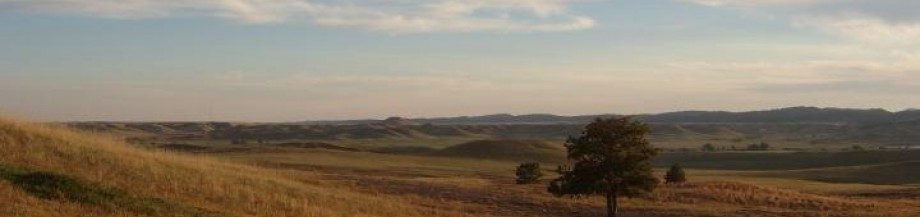
Pickstown, South Dakota, is the kind of place where visiting fisherman can buy breakfast and bait at the same place, and the waitress has long since grown tired of jokes about what kind of worms are in the hamburgers. Most visitors—and there are plenty of them, come to fish and waterski and have family reunions at the campgrounds and picnic areas along the Missouri River—never explore further than the motels, cafes, and gas stations along the highway.

But when it was young, Pickstown was home to several thousand people. Unlike most prairie towns whose fates were tied to the coming and going of the railroads, it was a boomtown by government design. Built between 1946 and 1949 and owned by the federal government, it was created to house the workers building Fort Randall Dam.

When the dam was finished a few years later, the town dwindled. Now it is home to only a couple of hundred people. Still, if you take a walk on a quiet weekend morning after the fishermen have hauled their boats off to the river, you can see signs of its youth. Sidewalks along spacious empty lots end abruptly where front doors used to be. Duplexes built as worker housing have been remodeled into single-family homes. A few barrack-style apartment buildings probably survive on vacation rentals.

The Rainbow Room on White Swan Street, which occupies the original shopping center, is available for weddings, anniversary celebrations, dances, and reunions. At least during the summer, it appears to be a busy place. When we came in on Sunday morning for our family reunion, one of the refrigerators in the kitchen still held the top of the cake from the previous night's wedding reception.

A couple blocks away is Pickstown's hidden gem—the Community Church. A plain, white-painted building, it was locked when I peeked through the front window on Saturday morning but was open for services when I went back on Sunday. The pastor of the tiny congregation seemed pleased to give me a tour.

The church is a simple, appealing sanctuary with subdued stained glass windows and light oak pews. I suspect collectors would break the tenth commandment and covet its hexagonal light fixtures with their amber glass panels set into ironwork frames. The altar, also of oak, is appropriately plain for a small Protestant church.

Behind it, though, is what the pastor called "the church's secret." A second altar. And a third. All three are set on a revolving platform. The design, apparently, came from military chapels built to be easily reconfigured for Protestant, Catholic, and Jewish services.

I'd love to know how many of these chapels are still in use, but so far I haven't been able to find out much about them. There doesn't seem to be one in the only other government town I'm familiar with—Boulder City, Nevada, built for the workers building Hoover Dam. It had a locally-built interdenominational Protestant church instead.

The Catholic altar in the Pickstown church hasn't been used for some time, and it's doubtful whether the Jewish altar has ever been used at all. During the town's boom years, though, Catholics and Protestants shared the chapel. According to Adeline Gnirk in her 1986 history of this area, The Epic of Papineau's Domain, Mass was held at 7:30 and a community Protestant service at 10:30.

In between, however, the Lutherans had their own service at 9:00. Maybe the town was large enough for the Lutherans to have a separate congregation. Or maybe, to the strictest followers of Martin Luther, ecumenicalism can only be taken so far.

Categories: Remembering When, Travel | Tags: , , , , , , , | 2 Comments

The Green Leaves of Summer

When did it get to be September? Apparently I wasn't looking. But I just turned my back for a few minutes, I swear. A week ago, we traded the 95-plus temperatures here for the 100-plus temperatures of southern New Mexico. It may be, as everyone there points out, a "dry heat," but it would be easier to live with if it would cool off at night enough to at least consider opening a window.

While we were gone, summer not only opened its windows, but carelessly left the back door ajar as well, and fall began creeping in. Or at least it started sniffing around the opening. It was chilly here this morning. Summer, still lush and arrogant with this year's abundant rain, just hasn't noticed yet that its days are growing shorter.

Neither have our tomato plants. It's been almost six weeks since they were stripped of all their leaves and most of their fruit by a hailstorm. They were nothing but battered stalks that obviously needed to be pulled up and tossed onto the compost pile.

Before I got around to cleaning up the mess the hail had made of them, though, the plants started to recover. A few leaves started growing back, and then a few more, and now the plants are almost as tall as they were before the hail, vibrant with new green leaves and covered with blossoms.

I don't have the heart to tell them that all their hard work is in vain. There's no way they can produce another crop before the first hard frost. It's like seeing someone get badly injured in a car accident, who survived surgery and has been working furiously at rehab and making a great recovery—only you've seen this movie before and you know they're going to walk out of the hospital and get run over by a garbage truck. I can see what's going to happen, but I can't do a thing to stop it.

Meanwhile, out on the deck, the two pots of pansies that also got hit by the hail are still blooming. The first hailstorm smashed them into a quarter of an inch of green mush. About half the plants didn't survive. Within a week, however, battered stems with a few tattered leaves had managed to stagger more or less upright and put out defiant buds. Two weeks later, the second hailstorm knocked them around. Beaten but unvanquished, they were blooming again within a few days. They are blooming still, their vivid yellow and purple making the most of every day between now and the first freeze.

In her first draft of Gone With the Wind, the name Margaret Mitchell chose for her heroine wasn't Scarlett O'Hara. It was Pansy. I can understand why.

Fall may be just around the corner, but its time hasn't quite come yet. It can wait its turn.

Categories: Living Consciously, Words for Nerds | Tags: , , , | Leave a comment

Blog at WordPress.com.